What Does a “1Y Return” Really Mean?
A simple breakdown of what a 1-year return shows and how to read it correctly.
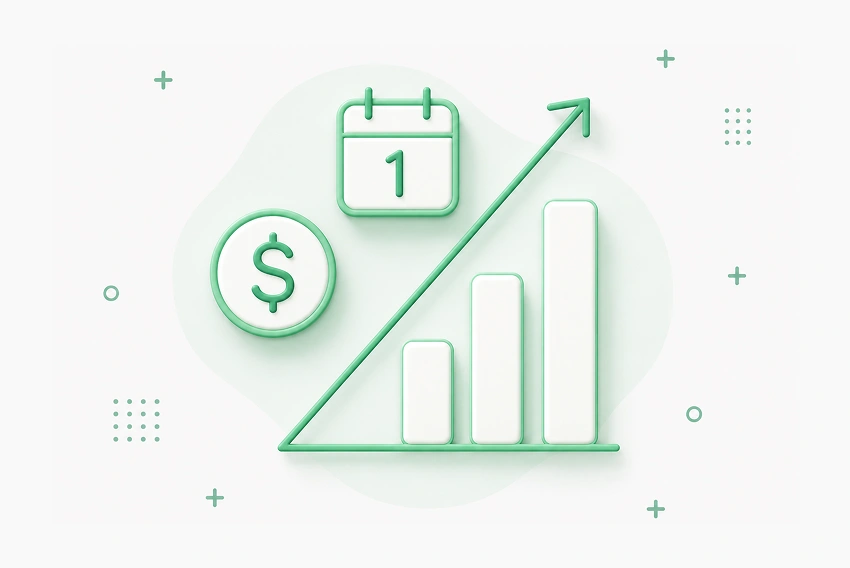
When you see “1Y Return +23.4%” next to an ETF like QQQ, it means the value of the asset has grown by 23.4% over the past year, counting from today back to the same date one year ago.
Note: The “1Y Return” indicator may be calculated differently depending on the platform. Some platforms include not only price changes but also paid dividends (total return), while others consider only price changes (price return). Always check which one is shown.
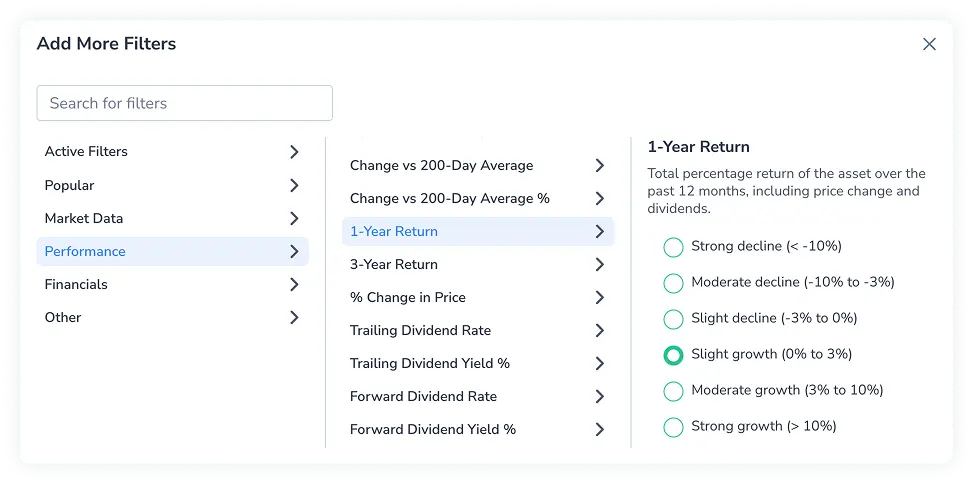
Let’s make it real. A $10,000 position in QQQ a year ago would now be valued at $12,340 — a price change of $2,340.
Example Calculation
A $10,000 position opened one year ago would now be valued at:
| Example | Value |
|---|---|
| Initial amount | $10 000 |
| Price change (+23.4%) | +$2 340 |
| Current value | $12 340 |
But keep in mind — this money isn’t “yours” until you sell at least part of your holdings. Until then, it’s called unrealized profit — the asset is priced higher, but no cash has been received.
Realized vs Unrealized Profit
The value change is unrealized until a sale occurs. Sell 20 shares at $123.40 each → you receive $2 468 cash (realized) and still hold 80 shares ($9 872 unrealized). Together = $12 340 total value.
Partial Sale Example
Suppose you own 100 shares worth $123.40 each. You decide to sell 20 of them:
- You receive $2,468 in cash (20 × $123.40) — that’s realized profit.
- You still hold 80 shares worth $9,872 — unrealized.
Together, your total value remains the same — but part is now received as cash, while the remainder is still priced on paper.
Bottom Line
Tracking 1Y Return helps compare the yearly performance of assets, but it’s only part of the whole picture. This metric doesn’t account for all risks or guarantee similar results in the future and can be misleading during volatile periods.