

Each API request has a base call cost
Every request includes a small per-call charge that covers request processing, normalization, and delivery

You pay only for the data you request.
No subscriptions, no per-user fees, no bundled features.
FinImpulse API pricing is designed for developers and data teams building real products — from MVPs to production systems. Costs are calculated per request and per data row returned, with full transparency and linear scaling.
Every request includes a small per-call charge that covers request processing, normalization, and delivery
When an endpoint returns lists or historical records, a lightweight per-row cost applies based on the actual data returned
No minimum volumes. No bundled features. Optimized responses, filtering, and caching help reduce unnecessary usage
Instead of pricing per product or per user, pricing is based on the type and volume of data returned
| Data Category | Typical Use Cases | Pricing Model |
|---|---|---|
| Search & Discovery | Global asset search, ticker lookup, autocomplete | Per call + Result rows |
| Market Snapshots | Summary, profile, ownership overviews | Per call |
| Historical Data | Prices, returns, valuation history | Per call + Data rows |
| Fundamentals | Financial statements, valuation metrics | Per call + Data rows |
| Statistics & Risk | Ratios, performance, volatility, risk indicators | Per call |
| News & Events | News, filings, press releases | Per call + Article rows |
Pricing is based exclusively on API usage, which includes the number of requests made and the amount of data returned.
You pay only for the data you consume.
As products grow, usage usually increases along three dimensions:
Larger universes, portfolios, or coverage
Historical records, statistics, fundamentals
Intra-day updates, automation
Pricing scales linearly across all dimensions — without step functions or surprises.
These examples illustrate how individual API requests are priced. Actual cost depends on response size and data returned.
Every request includes a small per-call charge that covers request processing, normalization, and delivery
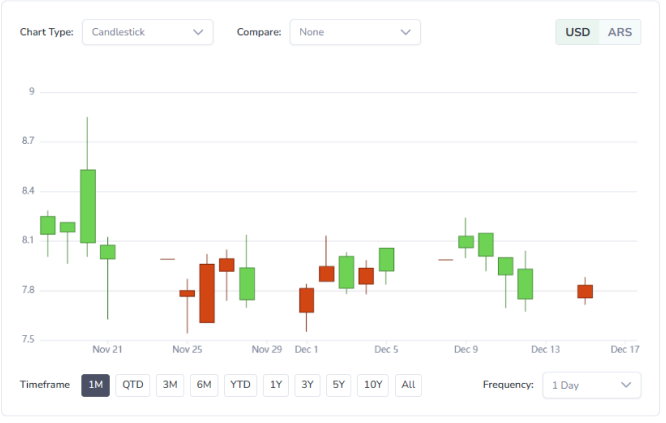
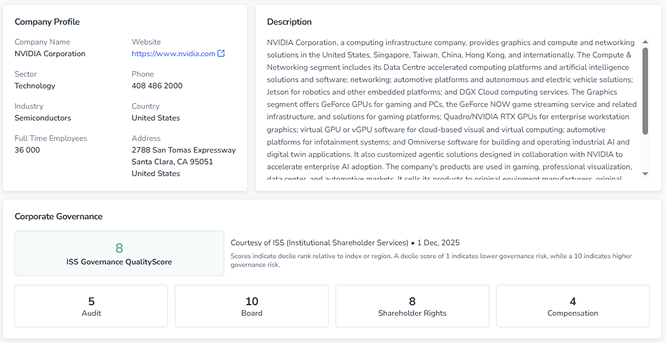
Used to retrieve descriptive, non-tabular data such as company or fund overview, classification, and metadata.
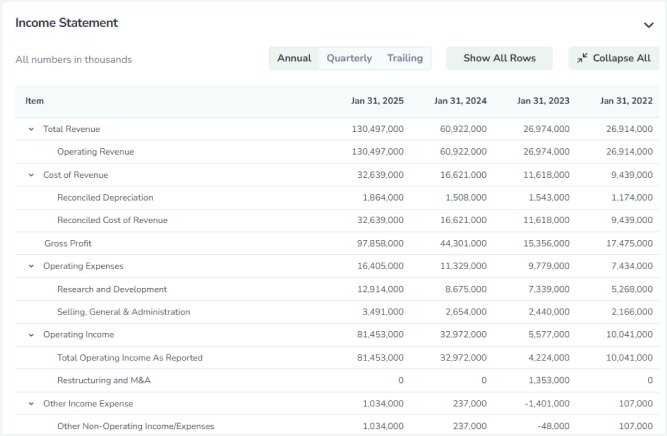
Typically returns multi-year financial statement data, where cost depends on the number of reporting periods included.
For the complete list of endpoints and detailed pricing rules, see the API documentation.
Explore full pricing details in your dashboard or test the API with $1 free credit.
